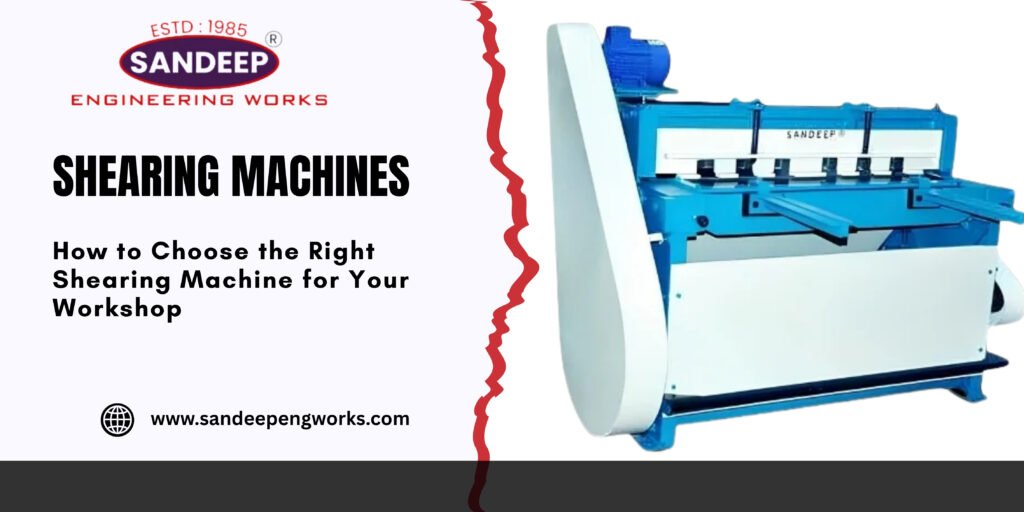
In the competitive world of sheet metal fabrication, the shearing machine is the heart of your production line. Whether you are dealing with thin-gauge steel or heavy-duty industrial plates, the right machine ensures precision, speed, and minimal material waste. However, with so many options—from manual foot-operated models to advanced power-operated systems—making the right choice can be overwhelming.
At Sandeep Engineering Works, we have been manufacturing high-performance industrial machinery since 1985. In this guide, we break down exactly what you need to look for to make an investment that pays off for years to come.
1. Analyze Your Material Requirements
Before looking at specific models, evaluate your raw material usage. The “one-size-fits-all” approach rarely works in professional fabrication. Ask yourself these three questions:
Material Thickness: What is the maximum gauge you regularly cut? Buying a machine under-rated for your thickest plate will cause premature motor failure and uneven cuts.
Material Type: Are you processing mild steel, stainless steel, or aluminum? Each requires different blade clearances for a clean finish.
Production Volume: Is this for a high-speed, continuous production line or occasional small-batch fabrication?
2. Choosing the Right Shearing Technology
Choosing the right type is the first step toward factory production efficiency. Here is how our main categories compare:
Foot Operated Shearing Machines: Perfect for small-scale workshops requiring high control and zero electricity costs for lighter gauges.
Pneumatic Shearing Machines: Ideal for medium-duty work where you need clean cuts with minimal maintenance.
Power Operated Shearing Machines: The standard for high-volume industrial tasks where heavy-duty performance is required.
Hydraulic Shearing Machines: The gold standard for precision and thick plates, offering superior cut accuracy.
3. Mechanical vs. Hydraulic: Which Power Source?
One of the most common debates in our industry is whether to go with Mechanical or Hydraulic systems for your metal cutting equipment.
Mechanical Shearing Machines are typically preferred for high-speed, repetitive cutting. Because they use a flywheel-driven mechanism, they provide a very consistent, rapid stroke. They are rugged, durable, and highly cost-effective for shops that process a consistent material thickness all day long.
Hydraulic Shearing Machines, on the other hand, offer superior versatility. If your work involves varying material thicknesses or requires extreme precision, hydraulic models offer adjustable stroke and force. This prevents the metal from deforming or twisting, which is crucial when your shop takes on diverse client projects.
4. Why Reliability Matters
Since 1985, we have seen that the most successful workshops prioritize machine rigidity. A machine that vibrates during a cut will never provide a clean edge. At Sandeep Engineering Works, our focus is on precision-engineered, heavy-duty steel bodies that minimize vibration and ensure consistent performance across all shifts. When you buy a machine, you are buying the accuracy of every cut for the next decade.
Frequently Asked Questions (FAQ)
Q: Can I use a foot-operated machine for heavy plates? A: Foot-operated machines are designed for lighter gauges. For heavy industrial plates, we highly recommend our Power Operated Shearing Machines to ensure operator safety and machine longevity.
Q: How often should I sharpen my shearing blades? A: This depends on your usage volume. If you notice burrs on the edges of your cut material, it is a sign that your blades require inspection or sharpening.
Q: Do you provide on-site installation? A: Yes, we provide professional installation and commissioning services across India to ensure your machine is set up for maximum efficiency from day one.
Ready to Upgrade Your Production Line?
Choosing the right industrial fabrication tools is an investment in your company’s future. If you are still unsure which machine fits your specific production needs, our technical experts are here to help.Browse our full range of Shearing Machines here or Contact us today for a personalized consultation tailored to your factory's output goals.