
Forming flat metal sheets into accurate cylinders, tubes, or curved panels is a core operation in many fabrication shops. Achieving a smooth, uniform radius without flat spots requires specialized rolling equipment designed to handle specific material thicknesses and diameters.
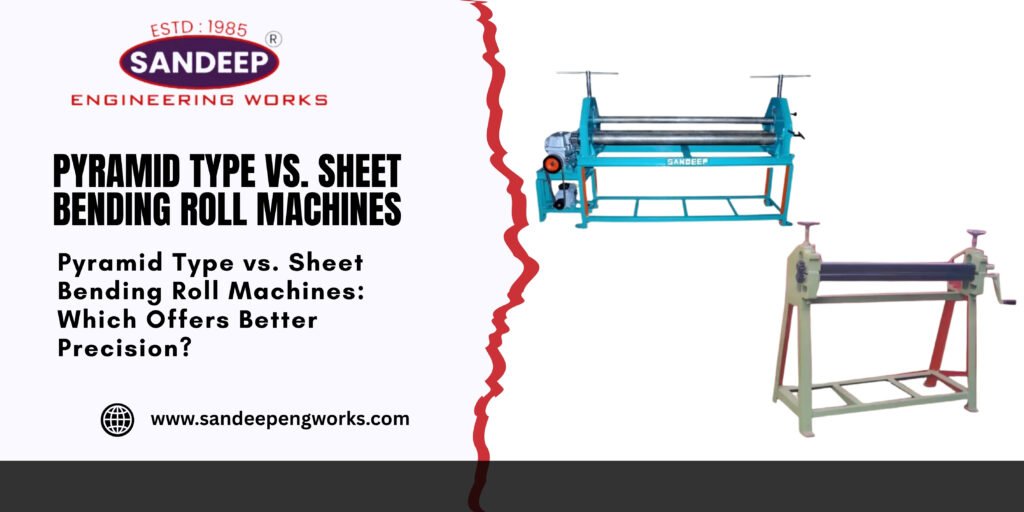
When upgrading or outfitting a workshop, manufacturers often compare the classic Pyramid Type Plate Bending Roll Machine with general Sheet Bending Roll Machine configurations. Understanding how each setup grips and shapes the metal helps ensure high precision in every finished piece.
Understanding Pyramid Type Plate Bending Rolls
Pyramid rolling machines get their name from the triangular arrangement of their three rolls. The two lower rolls are fixed horizontally, while the upper roll moves vertically up and down in the center.
-
How It Works: The sheet is fed between the lower rolls, and the top roll descends to apply pressure, creating a symmetric pyramid shape that forces the metal into a curved radius.
-
Excellent Pre-Bending Control: Pyramid designs make it easy to adjust the top roll height gradually, allowing operators to carefully monitor the curvature and eliminate flat ends on smaller cylinders.
-
Best Workshop Uses: General tank manufacturing, pipe fabrication, and structural rolling where symmetric, uniform curves are needed across medium-to-heavy plates.
Understanding Standard Sheet Bending Roll Machines
General sheet bending rolls encompass various mechanical arrangements—such as initial pinch designs—where the feeding and forming rolls interact differently to grab and wrap the metal sheet.
-
How It Works: Instead of a central descending roll, these machines often use a pinch roll system that clamps the leading edge of the sheet tightly between two rolls before a third roll bends it upward.
-
Quick Edge Gripping: Pinch-style machines excel at catching thin or slippery sheets instantly, reducing slippage during the initial feed.
-
Best Workshop Uses: High-speed, lighter-gauge rolling tasks, HVAC duct components, and repetitive enclosure manufacturing where fast cycle times are essential.
Key Factors to Consider for Your Shop
-
Material Thickness and Rigidity: For heavier plates that require steady, controlled downward pressure, the classic stability of a Pyramid Type Plate Bending Roll Machine offers exceptional structural reliability.
-
Ease of Operation and Feed Speed: If your shop focuses on rapid, high-volume production of lighter sheets, standard Sheet Bending Roll Machine setups with quick-pinch loading can streamline your workflow.
-
End Flatness Management: Consider how much flat edge remains after rolling. Pyramid designs allow for easier edge pre-bending adjustments to minimize straight sections at the seam.
Conclusion
Selecting the right rolling machine depends on the types of cylinders and thicknesses your shop handles daily. By understanding how roll placement influences metal flow, you can achieve smooth, accurate curves every time.
Explore our heavy-duty Pyramid Type Plate Bending Roll Machine models for precise cylinder forming. Check out our versatile Sheet Bending Roll Machine range built for smooth daily workshop operations.