
In sheet metal fabrication, adding structural rigidity, clean edge finishes, or secure pipe connections often requires specialized forming operations like beading, crimping, and flanging. These processes transform flat or cylindrical sheets into finished, durable components used across various industries.
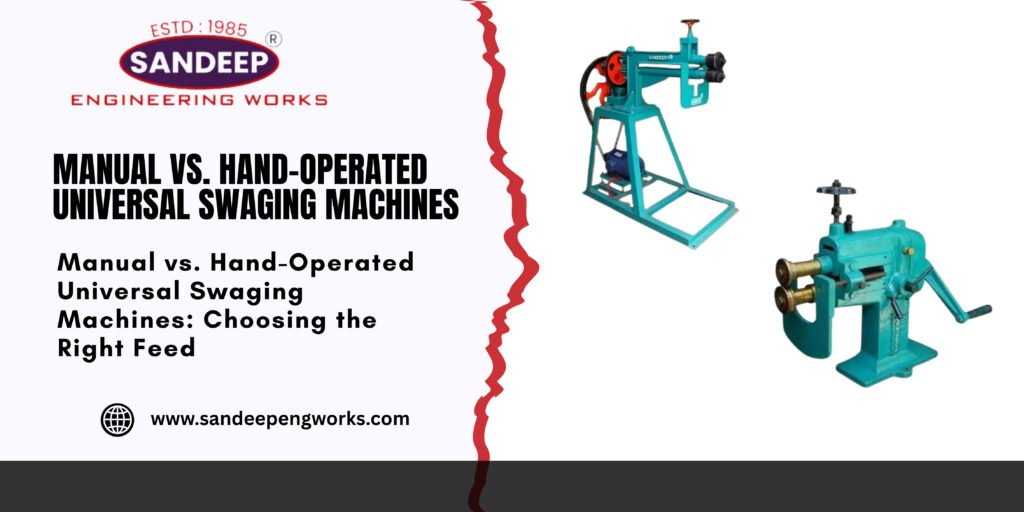
When setting up a workshop for versatile edge and tube shaping, technicians frequently look at the Manual Universal Swaging Machine and the Hand Operated Universal Swaging Machine. While both give operators direct tactile control over the forming process, their mechanical hand feeds offer unique advantages for different workshop environments.
Understanding Manual Universal Swaging Machines
Manual swaging units rely completely on direct human energy to rotate the forming rolls and feed the material through the station.
-
Direct Tactile Feedback: The operator has absolute control over the rotation speed, allowing for careful, slow-paced forming on delicate or complex parts.
-
Simplicity and Portability: Without complex gearboxes or external power requirements, these machines are exceptionally reliable, easy to maintain, and can be set up anywhere in the shop.
-
Best Workshop Uses: Custom restoration work, low-volume custom ductwork, and intricate artistic metal shaping where every revolution needs careful visual monitoring.
Understanding Hand-Operated Universal Swaging Machines
Hand-operated variants often incorporate mechanical crank handles, adjustable roll screw pressures, and geared drive systems that make turning the rolls smoother while using hand power.
-
Mechanical Advantage: The built-in hand cranks or gear reductions reduce the physical effort needed to press forming dies deep into thicker sheet metal gauges.
-
Consistent Roll Pressure: Equipped with secure top-shaft hand-screws, these machines allow operators to lock down a precise depth setting, ensuring uniform beading or crimping across long production runs.
-
Best Workshop Uses: HVAC ventilation pipe connections, container edge strengthening, and repetitive shop tasks requiring steady, uniform depth control without motorized power.
Key Factors to Consider for Your Shop
-
Material Gauge and Thickness: If your projects involve slightly thicker sheets or longer continuous runs where hand fatigue is a concern, a geared Hand Operated Universal Swaging Machine provides the leverage needed to ease the workload.
-
Job Frequency and Variety: For sporadic, custom repair jobs and detailed one-off pieces, a straightforward Manual Universal Swaging Machine offers quick setup and immediate operation.
-
Operator Control: Both options keep you completely in charge of the forming speed, eliminating the risk of sudden over-bending that can sometimes happen with high-speed automated systems.
Conclusion
Choosing the right swaging setup depends on how frequently your shop handles edge forming and how much physical leverage your operators need. By selecting the ideal manual feed design, you can achieve clean, professional beads and joints every time.
Explore our reliable Manual Universal Swaging Machine models for custom fabrication tasks. Check out our durable Hand Operated Universal Swaging Machine range built for smooth daily workshop operations.