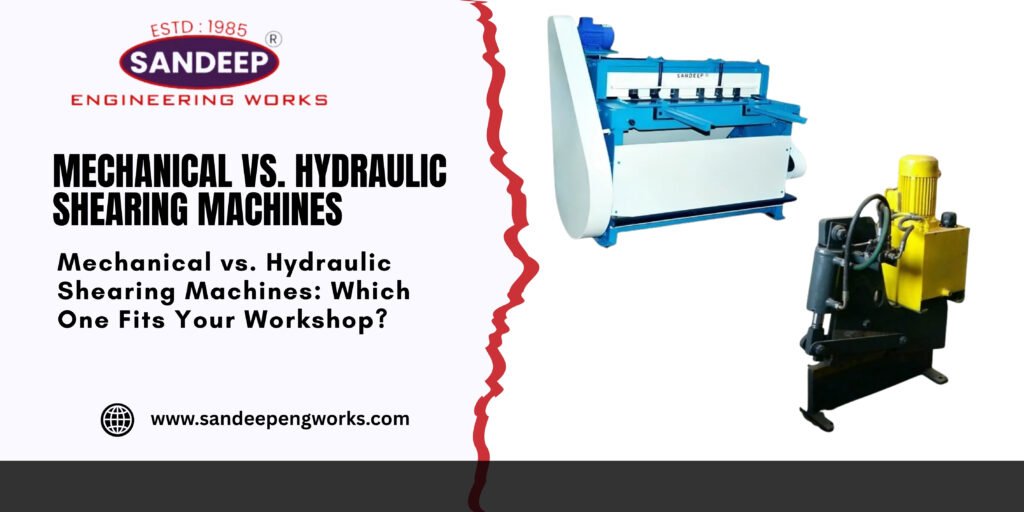
Choosing the right cutting equipment is one of the most important decisions for any metal fabrication shop. The machine you pick affects how fast you work, the thickness of the sheets you can handle, and your daily operating costs.
When looking at heavy-duty cutting options, workshop owners usually compare two main types: the Mechanical Under Crank Shearing Machine and the modern Hydraulic Shearing Machine. While both get the job done, they work in very different ways.
How Mechanical Shearing Machines Work
Mechanical shears rely on a flywheel, motor, and mechanical linkages to drive the cutting beam down rapidly.
-
Fast Cycle Times: Because they use stored rotational energy, mechanical shears are built for high-speed, repetitive cutting of standard sheet metal.
-
Consistent Strokes: They deliver a fixed stroke length, making them ideal for high-volume production runs where the same thickness of metal is cut over and over.
-
Simpler Maintenance: With fewer electronic or fluid components to monitor, upkeep is straightforward for standard workshop mechanics.
How Hydraulic Shearing Machines Work
Hydraulic shears use fluid power from a hydraulic pump and cylinders to drive the upper blade down with immense force and precise control.
-
Adjustable Stroke & Angle: You can easily adjust the cutting angle and stroke length to match smaller pieces, which saves time when switching between different jobs.
-
Overload Protection: Hydraulic systems naturally protect themselves if a sheet is too thick, preventing severe damage to the machine frame.
-
Smooth Power Delivery: They apply steady, crushing force throughout the entire cut, making them exceptional for thicker plates and heavier industrial tasks.
Key Factors to Consider for Your Shop
-
Production Volume vs. Variety: If your shop cuts the same gauge of sheet metal all day long at high speeds, a mechanical shear is hard to beat. If you change materials, thicknesses, and sizes frequently throughout the day, a hydraulic machine’s adjustability saves valuable time.
-
Material Thickness: For heavy, thick plates, hydraulic systems provide the reliable deep-cutting force needed without straining the motor.
-
Budget and Floor Space: Mechanical shears often have a smaller footprint and a lower initial investment, whereas hydraulic systems offer advanced control features for growing fabrication lines.
Conclusion
Both mechanical and hydraulic shears have a vital place in modern manufacturing. By looking closely at your daily workload, metal thicknesses, and production speed, you can invest in the machine that keeps your workshop running efficiently.
Need Technical Guidance for Your Workshop?
Browse our selection of heavy-duty Mechanical Under Crank Shearing Machine models. Explore our advanced range of Hydraulic Shearing Machine units for precision cutting.